Glaucoma, also known as kala motiya( (کالا موتیاis one of the leading causes of irreversible blindness worldwide. Unfortunately, it often goes unnoticed until serious vision loss has already occurred. In Pakistan, thousands of people suffer from glaucoma without even realizing it. Because it develops slowly and painlessly, glaucoma is often called the “silent thief of sight.”
What is Glaucoma?
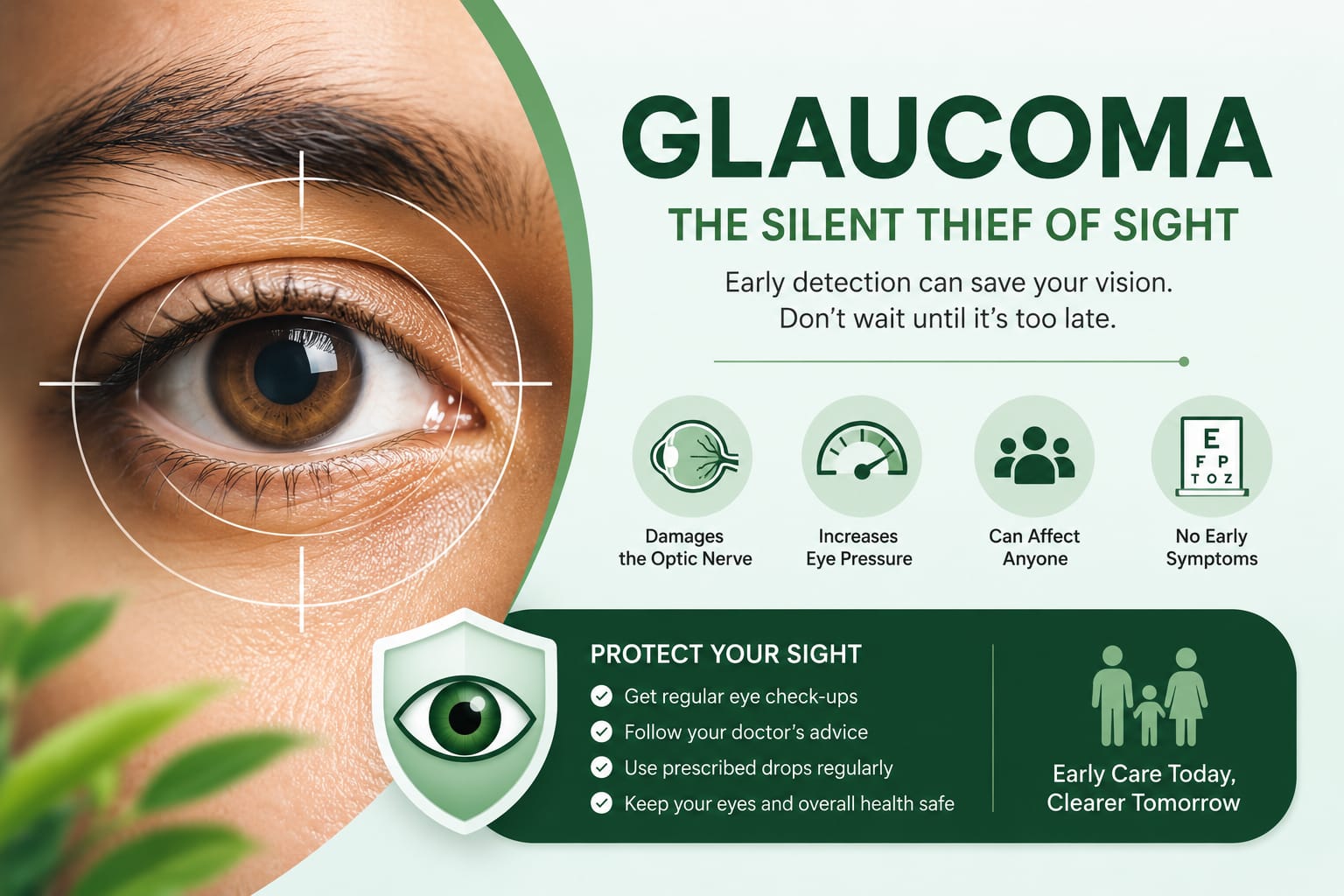
Glaucoma is an eye disease that damages the optic nerve, the part of that transmit the visual information to the brain. This damage usually occurs when eye pressure (intraocular pressure) becomes too high, though sometimes it can happen even with normal pressure.
The increased pressure occurs when the natural fluid inside the eye, called aqueous humor, doesn’t drain properly. Over time, this pressure damages the optic nerve, leading to gradual loss of vision that usually starts from the sides (peripheral vision).
Unfortunately, glaucoma damage cannot be reversed, but early detection and treatment can preserve the remaining vision and prevent blindness.
Types of Glaucoma
There are several types of glaucoma, but the two most common are:
1. Open-Angle Glaucoma:
The most common type, in which the drainage become less efficient despite the structures, responsible for drainage, are open.
2. Angle-Closure Glaucoma:
In this type of glaucoma, pressure increases due to obstruction of the drainage structures.
Who is at Risk of Glaucoma?
Anyone can develop glaucoma, but certain people are at higher risk. You’re more likely to develop glaucoma if you have:
- Family history of glaucoma
- Age above 40 years
- High myopia (minus number)
- Prolonged steroid use (for asthma, arthritis, or skin conditions)
- Eye trauma or surgery in the past
Because glaucoma runs in families, if one member is diagnosed, it’s essential for siblings and children to get their eyes checked regularly.
Symptoms of Glaucoma
One of the reasons glaucoma is so dangerous is that it doesn’t cause obvious symptoms in early stages. Vision loss starts slowly from the sides, and by the time central vision is affected, the disease is already advanced.
However, in angle-closure glaucoma, symptoms can appear suddenly and may include:
- Severe eye pain
- Blurred vision or halos around lights
- Redness of the eye
- Headache, nausea, or vomiting
If you experience these symptoms, seek emergency eye care immediately.
How is Glaucoma Diagnosed?
Early detection is key. A comprehensive eye examination can detect glaucoma before vision loss occurs. The tests may include:
- Tonometry: measures eye pressure
- Fundoscopy: examines the optic nerve
- Visual field test: checks for peripheral vision loss
- OCT scan (Optical Coherence Tomography): measures optic nerve thickness.
Treatment Options for Glaucoma
Glaucoma treatment focuses on lowering eye pressure to prevent further damage. The main options include:
1. Eye Drops:
The first line of treatment. These drops help reduce fluid production or improve drainage.
2. Laser Treatment (Laser Trabeculoplasty):
A painless outpatient procedure that improves fluid drainage, especially useful for open-angle glaucoma.
3. Surgery (Trabeculectomy):
Recommended when medicines or laser treatments fail to control pressure. Surgery creates a new channel for fluid to drain out.
Even after treatment, glaucoma patients must continue regular follow-up visits to monitor pressure and nerve health.
Living with Glaucoma
While vision lost from glaucoma cannot be restored, early detection and consistent management can protect your sight for life. Using prescribed drops regularly, avoiding missed doses, and attending follow-up appointments are critical. Patients with advanced glaucoma can also benefit from low vision rehabilitation services that help maximize remaining vision.
How to Prevent Glaucoma Blindness in Pakistan
Get your eyes checked every 1–2 years after age 40
If glaucoma runs in your family, get screened earlier
Avoid unnecessary or long-term steroid use
Protect your eyes from injuries
Raising awareness and encouraging routine eye examinations are the best ways to reduce glaucoma-related blindness in Pakistan.