Cataract, that is also known as safaid motiya (سفید موتیا(is one of the most common causes of vision loss in Pakistan, especially among people above 50 years of age.This is the age related change just like your hair turning Grey as you age. Many patients visiting eye hospital with the complain of blurred or cloudy vision, difficulty seeing at night, or faded colors. All classic signs of cataract. But the good news is that cataract is treatable, and modern cataract surgery in Pakistan can restore clear vision within minutes.
What is a Cataract?
A cataract is a clouding of the natural lens inside your eye. Normally, the lens is clear and helps focus light on the retina, allowing you to see sharp images. However, with age or other factors, lens becomes cloudy. This causes vision to become blurry, hazy, or dull as if you’re looking through a foggy window.
Cataract usually develops slowly and may affect one or both eyes. It’s not painful, but it can severely impact your daily life such as reading and driving and recognizing faces.
Common Symptoms of Cataract
You may have a cataract if you experience:
- Blurred or cloudy vision
- Glare or halos around lights
- Difficulty seeing at night
- Fading or yellowing of colors
- Double vision in one eye
- Frequent changes in your glasses prescription
If you notice any of these symptoms, it’s time to get a comprehensive eye examination by
Who is at Risk?
Cataracts are most often related to aging, but several factors can increase your risk, including:
- Diabetes
- Excessive sunlight (UV) exposure
- Smoking
- Long-term use of steroids
- Eye injuries or inflammation
- Poor nutrition
When Should You See a Doctor?
Many people ignore early cataract symptoms thinking it’s “just weak eyesight.” However, cataract can worsen silently over time. You should visit an eye specialist if:
- Vision becomes blurry despite new glasses
- You face difficulty while driving, reading, or recognizing faces
- You experience glare from car headlights at night
- Early detection allows timely management and helps prevent complications.
Cataract Treatment Options in Pakistan
Once a cataract begins to affect your vision and daily activities, the only effective treatment is cataract surgery. No eye drops or medications can reverse it.
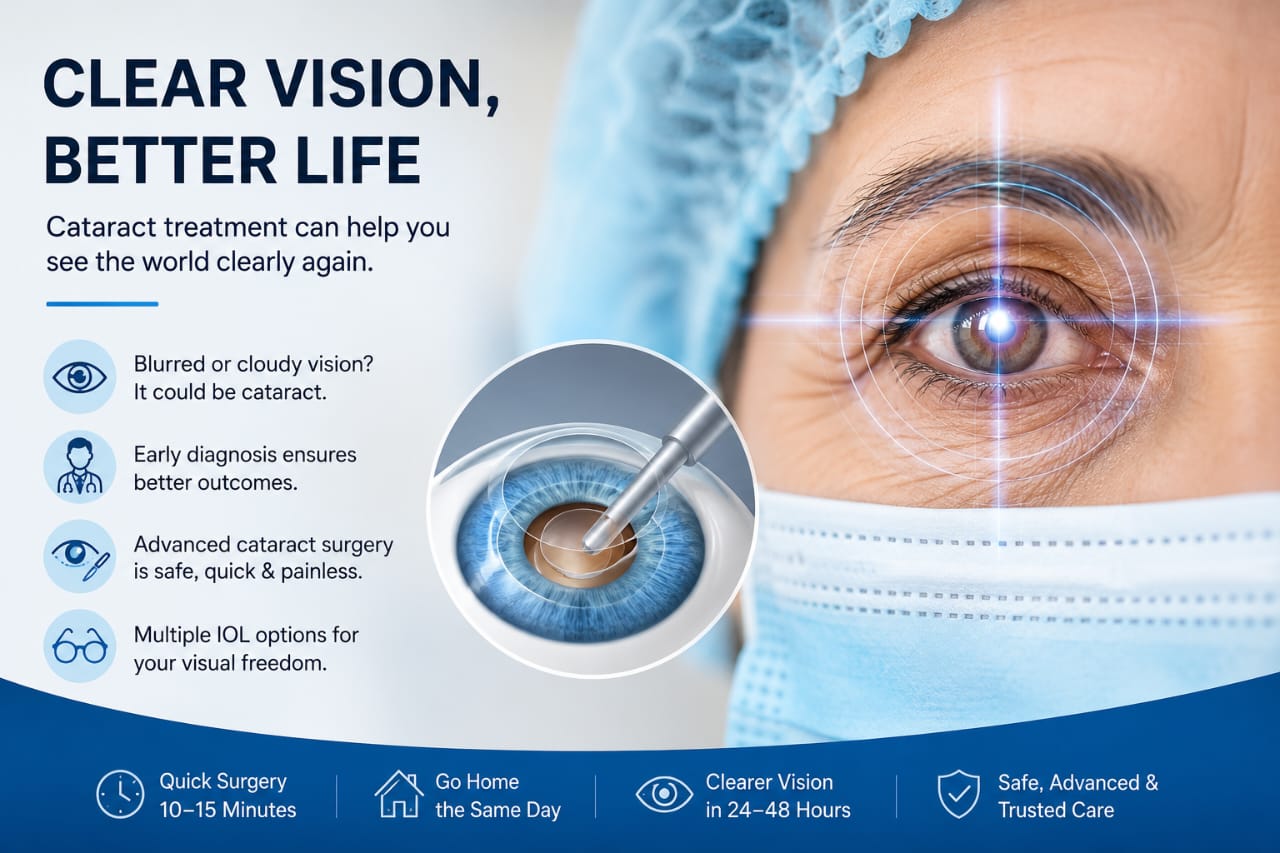
During cataract surgery, the cloudy lens is removed and replaced with an artificial intraocular lens (IOL). The surgery is painless, quick (usually 10–15 minutes), and performed under local/topical anesthesia. Most patients go home the same day and notice clearer vision within 24 to 48 hours.
Modern phacoemulsification surgery, available in most major Pakistani cities, uses ultrasonic technology to remove the lens through a tiny incision that ensures a faster recovery and minimal discomfort.
Types of Intraocular Lenses (IOLs)
For cataract surgery, choosing the right IOL is crucial for your visual comfort. Here are the main types available in Pakistan:
1. Monofocal IOL: this type of lens Provides clear vision for one distance (usually far). You may still need glasses for reading. These are the most commonly used and affordable lenses.
Best for: Patients who are comfortable wearing reading glasses.
2. Multifocal IOL :it Offers clear vision for near, intermediate, and distance without needing glasses. These lenses are ideal for people with active lifestyles.
Best for: Professionals and individuals who want total freedom from glasses .
3. Toric IOL:it Corrects astigmatism along with cataract. It provides sharper vision without the need for additional correction.
Best for: Patients with significant astigmatism.
4. EDOF (Extended Depth of Focus) IOL :this is the Newer premium lenses that provide a continuous range of vision from distance to intermediate, with minimal glare.
Best for: Patients seeking balanced, natural vision in all conditions.
Your eye surgeon will recommend the best option based on your eye health, lifestyle, and budget.