AMD is one of the leading causes of irreversible central vision loss in adults over 50. Although it does not cause total blindness but it can seriously impact your ability to read, drive, or recognize faces. Understanding the condition and getting timely treatment can help protect your vision and independence.
What is Age-Related Macular Degeneration (AMD)?
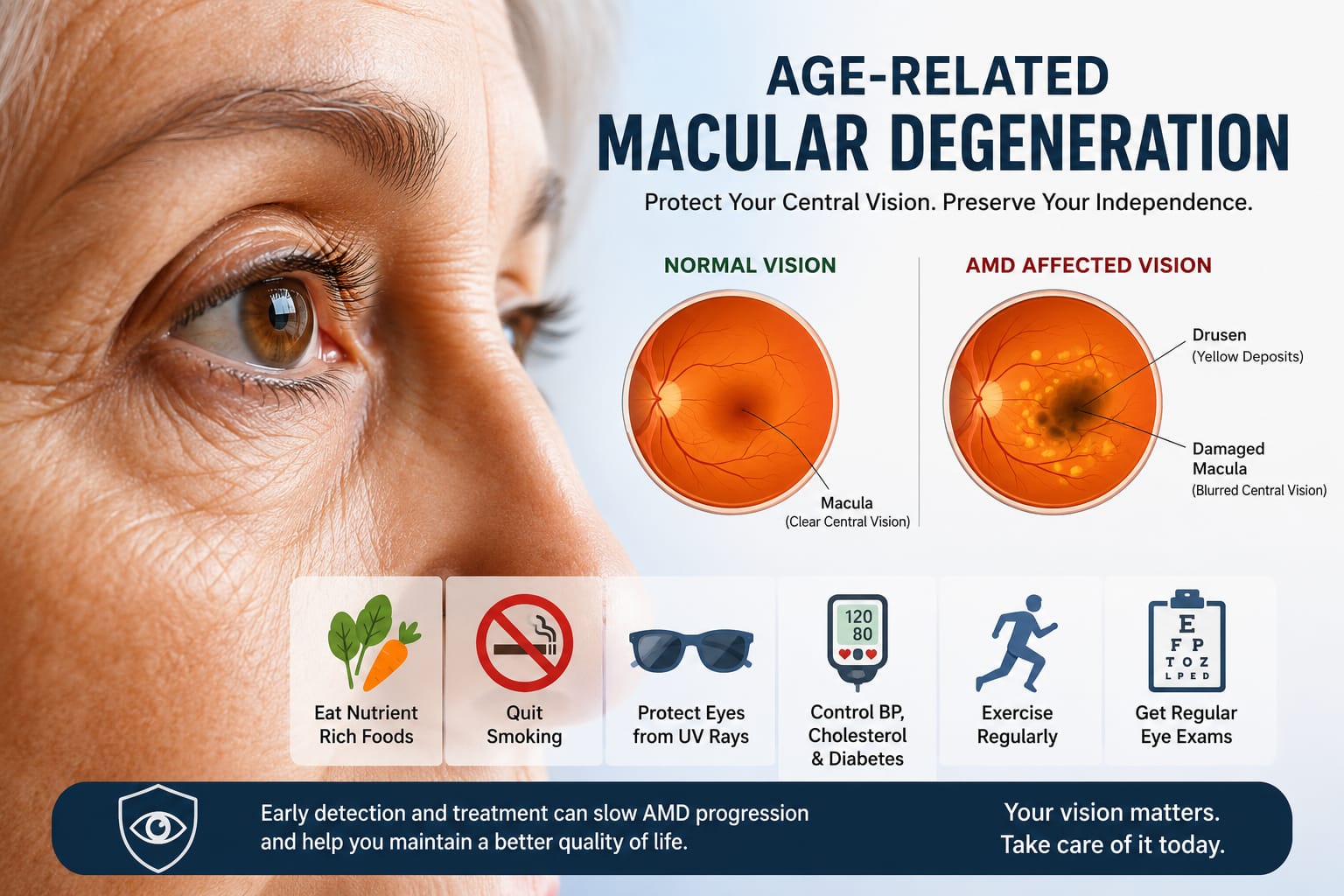
AMD is a degenerative condition that affects the macula, the small central part of the retina responsible for sharp, detailed vision. The retina acts like an olf fashion camera film/reel, and the macula is the area that lets you focus on fine details. When the macula becomes damaged, central vision becomes blurry or distorted while peripheral (side) vision usually remains normal.
AMD progresses slowly in most people, but in some cases, it can advance rapidly and lead to severe vision loss within months. Early detection through regular eye exams is therefore critical.
Types of AMD
There are two main types of AMD:
1. Dry (Atrophic) AMD:
The most common form, where the light-sensitive cells in the macula gradually break down. It progresses slowly and often begins with the appearance of yellow deposits called drusen under the retina.
2. Wet AMD:
Less common but more severe. It occurs when abnormal blood vessels grow beneath the retina and leak fluid or blood, causing rapid and severe central vision loss.
Who is at Risk of AMD?
Certain factors increase the risk of developing AMD, especially among older adults in Pakistan. You are at higher risk if you:
- Are above 50 years of age
- Have a family history of AMD
- Smoking
- Have uncontrolled high blood pressure or cholesterol
- Eat a low-nutrient diet lacking leafy greens and antioxidants
- Have prolonged sun exposure without UV protection
- Are overweight or diabetic
Because many Pakistanis experience strong sunlight exposure and limited eye-check awareness, AMD often goes undiagnosed until advanced stages.
Symptoms of AMD
AMD affects central vision, not peripheral vision. You should see an eye specialist if you notice:
- Blurred or distorted central vision
- Difficulty recognizing faces
- Needing brighter light for reading
- Straight lines appearing bent or wavy
- A dark or empty spot in the center of your vision
These changes can be subtle at first, so routine visits are essential, even if your vision feels “normal.”
Diagnosis
A simple dilated eye exam can detect early signs of AMD. Your eye doctor may use the following tests:
- Amsler Grid Test: To check for distortion in central vision.
- OCT (Optical Coherence Tomography): Produces detailed images of the retina and macula.
- Fluorescein Angiography: Highlights leaking blood vessels in wet AMD.
Treatment Options for AMD
While there is no cure for AMD, timely treatment can slow its progression and preserve your vision.
1. For Dry AMD:
Maintain a healthy diet rich in antioxidants, zinc, and lutein (found in spinach, kale, and carrots).
- Stop smoking.
- Take vitamin supplements if advised by your eye specialist.
- Use low-vision aids such as magnifiers and special reading lamps to improve daily living.
2. For Wet AMD:
- Anti-VEGF Injections: Medicines like Ranibizumab or Aflibercept are injected into the eye to block abnormal blood vessel growth and leakage.
- Laser Therapy: Occasionally used to seal leaking blood vessels.
Regular follow-up visits are crucial to monitor progress and prevent recurrence.
Living with AMD
Even though AMD can cause permanent vision changes, many patients lead independent and active lives with proper care and visual re atient can be benefited with:
- Low-vision rehabilitation programs
- Customized magnifying devices
- Contrast-enhancing lenses and aids
- Visual training techniques to maximize remaining sight
These supportive services help you maintain reading, mobility, and independence even with reduced central vision.
How to Prevent AMD
While you can’t control aging or genetics, you can lower your risk by:
- Wearing UV-protected sunglasses in sunlight
- Eating a balanced diet rich in fruits, vegetables, and omega-3 fatty acids
- Exercising regularly and maintaining healthy blood pressure
- Quitting smoking
- Getting routine eye exams every year after age 40